The best time for an architecture walk
Chicago's buildings stand there all year, but the walk around them changes a great deal with the season. A January morning on LaSalle Street and a July afternoon on the Riverwalk feel like two different cities. This guide goes season by season, then down to the day of the week and the hour, so you can pick a tour that suits the weather you are likely to get.
Every season works, for different tours
Chicago has no bad month for buildings, only months that favor some tours over others. Winter rewards the walks that spend time indoors, while summer suits the river and early starts. Fall adds a festival when doors open that stay shut the rest of the year. The table gives the broad picture, and the sections below go into each season. Weather here can turn at any time of year, so treat the figures as rough averages.
| Season | Usual weather | Good fit | Watch for |
|---|---|---|---|
| Winter (December to February) | Cold and windy, January highs about 32 °F (0 °C) | The Pedway walk, interiors walks | Short days, most cruises stopped |
| Spring (March to May) | Mild and changeable | Any walk, cruises starting up | Sudden rain or a cold snap |
| Summer (June to August) | Warm, July highs about 84 °F (29 °C) | Cruises, morning walks | The busiest months; book a week or two ahead |
| Fall (September to November) | Usually crisp, sometimes wet | Open House Chicago, usually in mid-October | Cruises winding down late in the season |
Beating the winter wind in the Pedway
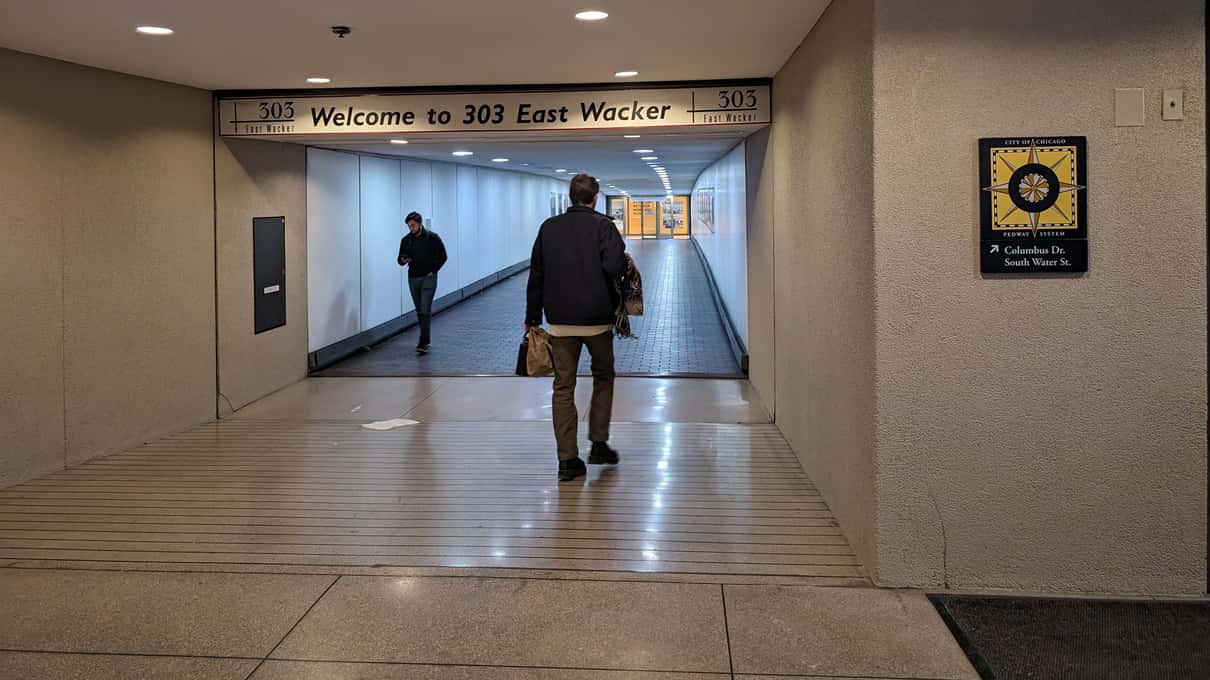
Chicago winters are cold and windy, with January highs usually around 32 °F (0 °C) and plenty of days below that. Wind funnels between the towers, and ten minutes on a corner looking up at a cornice can feel longer than it is. The answer is a route that keeps you under cover. Inside Chicago's Underground Pedway and the Loop walk, from ~$35, follows the Pedway through several miles of tunnels and concourses joining downtown buildings, and spends most of its two hours indoors. One guest went out on a day of about −24 °F (−31 °C) and was glad of every corridor. The catch is that the tunnels are not all handsome, and some reviewers wanted more walking and less detail on finding their way around down there.
The interiors walks also suit cold weather, because much of each tour happens inside lobbies, though you still cross open streets between them. December adds decorations. Macy's on State Street, the former Marshall Field's, dresses up for the holidays, and one of Inside Chicago's own photos shows a group gathered by a Christmas tree in a lobby. Winter daylight is short. A morning or midday start gives you the facades in better light.
Two hours mostly under cover
Inside Chicago's Pedway walk meets under the big mosaic at 120 N. LaSalle Street and spends much of its roughly 1.5 miles (2.4 km) indoors, through stained-glass hallways and past an underground swimming pool, from ~$35. Groups stop at 15, and both sites refund in full up to a day before.
Spring is mild and changeable
Spring is the gamble. A day in April can feel like early summer and the next like late winter. Pack layers and look at the forecast the night before. All six main walks cancel free up to 24 hours ahead, which means you can hold a slot early and still change your mind once the forecast firms up. Crowds are usually lighter than in summer. Most river cruises start sailing again in spring as well, which opens up a boat and a walk on the same day, as laid out in river cruise or walking tour?
Summer crowds and booking ahead
Summer is warm, with July highs usually about 84 °F (29 °C), and these are the busiest months for tours. Book a week or two ahead. Viator's figures show travelers booking Inside Chicago's interiors walk about 13 days before the date on average, and Chicago in a Day, from ~$99, about 39 days ahead, with only 12 places on each date. Heat matters on a long walk, so pick a morning start and carry water. The lobbies make good places to cool down, and on a hot afternoon the Pedway beats the sidewalk.
Long midsummer evenings help too, since a late-day cruise, where one is offered, fits neatly after a morning walk. If you go with children in the heat, read architecture walks with kids first, because the length of the tour matters more on a hot day than on a mild one.
Fall and Open House Chicago
Fall may be the most rewarding season of all. Days are usually crisp, and the summer crowds thin out. The big date is Open House Chicago, the CAC's free festival of open buildings, which usually takes place in mid-October. For a couple of days, doors that stay shut the rest of the year open to the public, so it is the one time you can see inside some places no tour reaches. Dates and the list of buildings change from one year to the next, so check the CAC's announcements close to your trip.
Fall is also the last good stretch for a cruise. The First Lady, the CAC's own architecture boat, from ~$57, sails for about 90 minutes with a docent and reads the skyline from the water. The catch is that it is seasonal, and the open deck turns cold early and late in the year, so bring one more layer than you think you need.
A crisp day also suits Inside Chicago's Art Deco interiors walk, from ~$35, which spends two hours on the brass and marble of the 1920s and 1930s. Its catch is the rhythm. About 1.5 miles of walking alternates between warm lobbies and cold streets, so dress for both. The tour is not wheelchair accessible either. Chicago's Art Deco buildings introduces the style before you go.
Picking the day of the week
The day of the week changes more than the crowd. On weekdays the Loop is at work. Lobbies are open and busy, and you share them with office workers and security desks. Weekends are calmer on the street, which is pleasant for looking up, but some lobbies lock their doors when the offices close. Sunday is the trickiest day. The Rookery closes on Sundays, and Empire Tours' listing says its walk swaps in another stop then. Other routes that usually include the light court may change as well. If it matters most to you, avoid Sunday, though even then no door is promised.
The same logic applies if you go without a guide. A self-guided Loop architecture walk works best on a weekday, when more doors stand open, and the Loop interiors you can walk into lists which lobbies usually welcome visitors.
Morning light, afternoon shadow
Time of day matters most for the camera. Morning light falls into LaSalle Street, while by late afternoon the tall walls on both sides put the canyon in shadow. If photographs of the canyon matter to you, aim for a morning walk. The weather matters more than the hour, though. CAC walks go out rain or shine, and their GetYourGuide listing gives no refund for weather, so a stormy forecast is a reason to cancel more than 24 hours ahead rather than hope for the best.